Corni di Fiasco · The area · Festivals & traditions
Festivals and traditions in Puglia, month by month
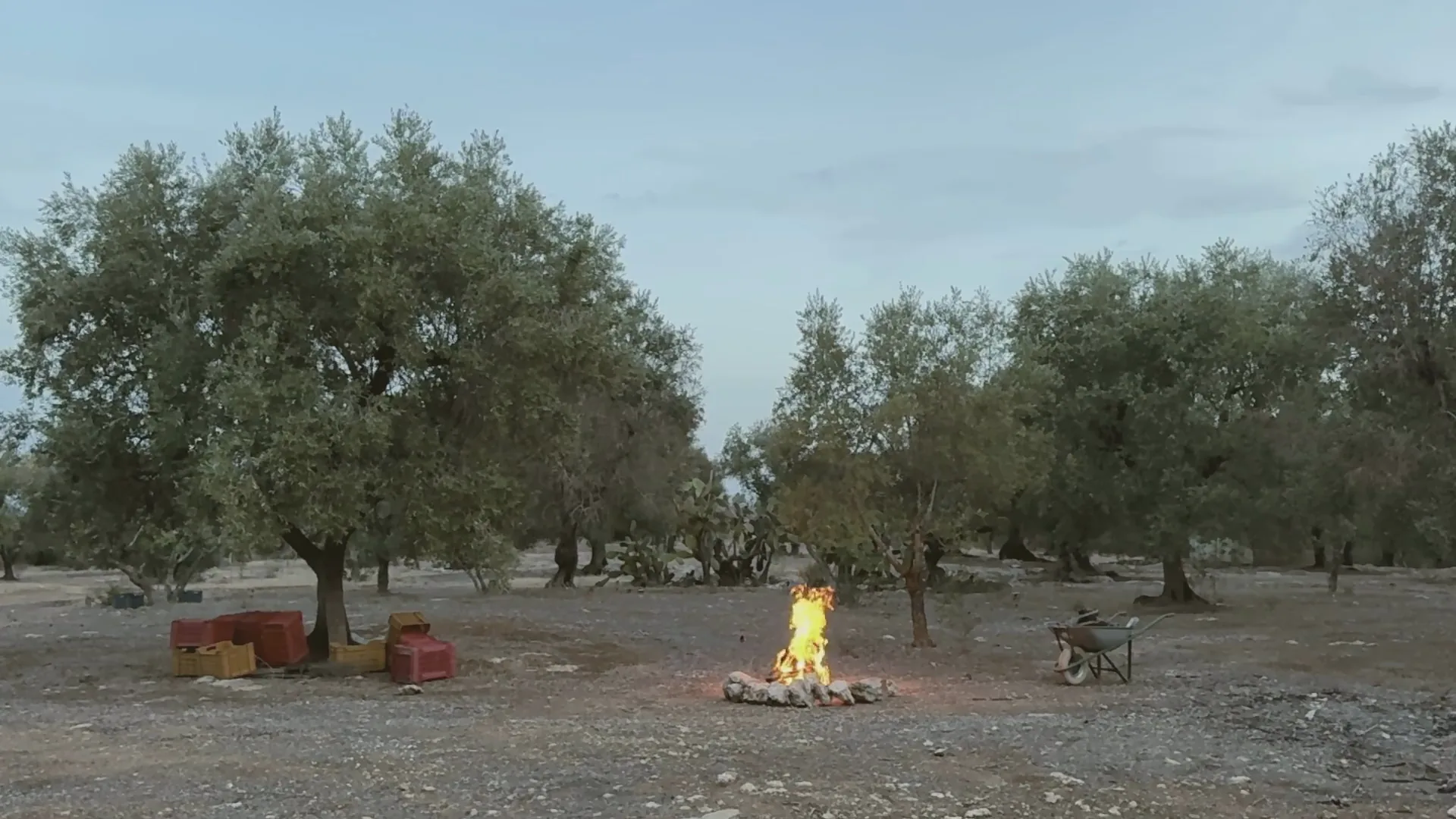
In Novoli, in January, they spend weeks piling up a mountain of vine prunings, and burn it in a single evening. In Monopoli, in December, people wait at dawn for a Madonna who arrives from the sea on a raft. In Gallipoli, in July, the patron saint goes out by boat and sails round the town walls, with the fishing boats behind her. Round here, every month, someone’s lighting a fire, carrying a saint in procession or frying something.
This is the calendar of the festivals and traditions of Puglia, or Apulia, from January to December, in the towns you can reach from Corni di Fiasco within an hour and a half by car, plus a few exceptions worth the journey. The dates change every year: before you set off, check the programme.
Why the rites exist, who brought them and what was here before: that’s in the Stories of Maruggio, in the chapter on pagan rites, and in the chapter on saints, bonfires and older gods in our page on the Puglias. This page is about when.
January
Puglia in January: the Fòcara at Novoli and the bonfires of St Anthony and San Ciro
The Befana, the old woman of Epiphany, has no rites of her own round here worth telling: on 6 January the holidays end, and that’s that. The good part starts five days later, and it starts with fire.
On the evening of 11 January, at Castellana Grotte, an hour and twenty minutes from the house, they light the Fanòve: dozens of woodpiles in the centre, on the outskirts and out in the country, the first of them, at around seven, in front of the sanctuary of the Madonna della Vetrana. The next day the Madonna goes out in procession and is given the keys of the town. Tradition has it that during the plague of 1690 two priests had the same inspiration, to heal the sick with oil from the Madonna’s lamp, and that the fires recall the belongings of the sick, burnt to stop the disease spreading. Before the bonfires the “Diana” still goes round: a band-led procession that calls at the olive mills to collect oil.
In Novoli, less than an hour away, on the evening of the 16th, the eve of St Anthony the Abbot, they light the Fòcara. It’s a pyre of vine cuttings left over from the pruning, about twenty metres tall, more in some years: the measurements change from one edition to the next. The pignunai build it. In the morning, with the “bardatura”, the image of the saint is hoisted to the top; in the afternoon the animals are blessed and the procession goes by; in the evening the fireworks climb the pyre and set it alight. They say it’s the biggest bonfire in the Mediterranean. Nobody has ever measured it, but standing underneath it you don’t feel like arguing.
On the 17th, St Anthony’s Day, there are fires elsewhere too. In Gallipoli, an hour away, the focareddhe, bonfires of olive and vine, open Carnival. “Per Sant’Antuono maschere e suono”, goes the saying: from St Anthony on, masks and music. And sure enough, that’s the day Putignano’s Carnival Thursdays begin.
Then it’s Grottaglie’s turn, the ceramics town, twenty-five minutes away. San Ciro is venerated as an Egyptian doctor and martyr, and it was a Jesuit from the town, St Francis de Geronimo, who brought him here from Naples. On the evening of the 30th, the eve of his feast, they light the Fòcra: an enormous hut of olive faggots and vine prunings, not a stick of old furniture, with a room inside that you can walk into before it burns. For the 2026 edition building had begun in mid-October; a couple of days before the festival the horses parade through town carrying the faggots. In 2026 about thirty thousand people stood round the fire; the children get a focaredda all of their own. To hear the people of Grottaglie tell it, this one’s the biggest bonfire in Europe. They say the same in Novoli.
In 2018 the Puglia Region passed a law specifically for the fire rites. Round here, nobody found that odd.
Anyone staying a few weeks in winter will find the rest on the page about long winter stays.
February
Puglia in February: Putignano Carnival, the Quaremma and Candlemas
February starts with a bear. On the 2nd, Candlemas, two giant papier-mâché bears lead a parade in Putignano, and the bear says whether winter is over.
Three days later it’s St Agatha’s Day; she’s the saint of Gallipoli’s cathedral. Tradition has it that in 1126, while her relics were travelling from Constantinople to Catania, one of them stayed behind on the coast near Gallipoli: a breast. Today that relic is in Galatina, and the two towns have never quite settled the matter.
20 February is a strange date. On that day in 1743 an earthquake shook Salento, and Nardò was the worst-hit town. Today, on the same day, three towns give thanks to the saint or the Madonna they credit with saving them. Nardò, fifty minutes away, thanks San Gregorio Armeno, St Gregory the Illuminator, its patron: his feast used to fall on 30 September, and was moved on purpose to the day of the earthquake. On the 20th, in Piazza Salandra, the tower bell tolls a hundred times for the victims; the bust of the saint is carried in procession with the arm reliquary, the evening before or on the day itself, depending on the year. Legend has it that during the earthquake the saint’s statue turned towards the epicentre, with its hand raised. The forearm relic was stolen in 1975, and in 1981 the Cardinal of Naples gave the town another. On the same day, for the same earthquake, Oria thanks San Barsanofio and Massafra the Madonna della Scala.
Then there’s Carnival, which moves with Easter and ends on Shrove Tuesday, somewhere between February and early March. The most famous is in Putignano, an hour and twenty minutes away, which by February has already been going since St Stephen’s Day (more on how it starts in December). From St Anthony’s Day on, each Thursday makes fun of a different category: monsignors, priests, nuns, widowers, madmen, married women and, last of all, cuckolds. On Shrove Tuesday the “Campana dei maccheroni”, the macaroni bell, tolls 365 times and closes the lot. In Putignano they say it’s the oldest carnival in Europe: they have a story from 1394, Venice has documents from the thirteenth century. The floats date from the twentieth century, and are none the less impressive for it.
In Gallipoli, Carnival dies of indigestion. On Shrove Tuesday the town stages Carnival’s death, and legend has it that Titoru, a soldier who came home on that very day, stuffed himself with sausages and meatballs to make up for lost time, and that was the end of him; at his funeral the chiangimorti, the hired mourners, wept over him. Elsewhere there’s less dying. In Massafra the papier-mâché floats have paraded since the 1950s, with the masks of Gibergallo and Lu Pagghiùsë; in Francavilla Fontana, twenty-five minutes away, on the two Thursdays before Shrove Tuesday men and women exchange mandorle ricce, almonds toasted and coated in sugar.
On Ash Wednesday an old woman dressed in black appears on the balconies of Salento. She’s the Quaremma, or Caremma: a dummy of straw and rags, hung from balconies, from terraces, from a line strung between two houses. In one hand she holds a spindle wound with wool; in the other a bitter orange stuck with seven hen’s feathers, as many as there are weeks until Easter. Each week one is pulled out: she’s a calendar. Who she is depends on who’s telling it: the dead Carnival’s widow, or his mother, as in Gallipoli, where the Caremma is Titoru’s mum. French soldiers, it seems, brought the name with them, from their carême: a lovely story, with no paperwork behind it. You see her in the Grecìa Salentina, in Martano, Martignano, Soleto and Sternatia, more than an hour away; in Gallipoli, in Tuglie, and in Cerfignano, where she spins round. In Maruggio? Not that we know of. During Lent, in Salento, people eat quaresimali, biscuits made with toasted almonds.
March
Puglia in March: the San Marzano bonfire and St Joseph’s tables
March is St Joseph’s month, and St Joseph, here, means two things: a fire and a table.
But first, a walk. From Sava, twenty minutes away, people go on foot to the sanctuary of the Madonna di Pasano, three kilometres outside the town, usually on the first Sunday in March, though it’s worth checking the date in town. Legend has it that in 1605 a slave in chains, in the service of a captain, prayed to the Madonna, and that a falling boulder broke the shackle on his ankle. Nobody wrote the story down until more than a century later. The boulder and the shackle, meanwhile, are still in the sanctuary.
The fire is at San Marzano di San Giuseppe, less than half an hour away, the town where they still speak Arbëresh, the Albanian that arrived here in the sixteenth century. The story goes that on the night of 18 to 19 March 1866 a storm devastated the countryside, that the town took it as punishment for a neglected devotion, and that the next day people carried the fallen branches into town and lit a great bonfire in front of the marquis’s palace. That year St Joseph became the patron, and the town added his name to its own. The bonfire is said to be called zjarri i madh to this day, the great fire. On 18 March, in the afternoon, the wood procession goes by: people on foot, horse-drawn carts, tractors loaded with olive wood. When it arrives the mayor hands the saint the keys of the town, and at around nine in the evening, in Contrada Principe, the bonfire is lit with fireworks. The same day, in one house, five people from the town play the Holy Family in front of a table of thirteen dishes: salad, broad bean purée, lampascioni (wild hyacinth bulbs), bean and chickpea soup, cauliflower, fried salt cod, massa (homemade pasta) with garlic, oil and olives, stockfish, boiled wheat, bread, oranges and fennel, zeppole and carteddate. On the 19th, at midday, the mattre, the tables for the poor, are blessed in the square; in the afternoon there’s the procession, in the evening the fireworks.
The tables are laid in Lizzano too, a quarter of an hour away. On the evening of the 18th people go from house to house to see them, by the light of oil lamps, beneath large images of the saint; on the 19th there’s the “table of the day after”, with a tasting and a bonfire. Among the sweets are pizzetti ti cannella, with cinnamon, and pasti ti mennula, almond paste.
Further down in Salento, towards Otranto, more than an hour away, the tables of 18 and 19 March have flesh-and-blood saints. In Giurdignano, Uggiano la Chiesa, Minervino and Poggiardo, a family invites a few people to lunch to play “the saints”, always an odd number, from three to thirteen. The meal is meatless, stops and starts again whenever St Joseph gives the sign, and ends with a bulb of fennel and an orange. In between comes massa with chickpeas, covered with strips of fried pasta, and a votive bread with the flowering staff in relief.
The sweet of 19 March is the zeppola: in Salento it’s fried choux pastry filled with custard.
March or April
Puglia in March or April: Holy Week in Taranto and Easter
Holy Week is when Puglia turns serious. Its dates move with Easter, which falls on the Sunday after the first full moon of spring, between 22 March and 25 April: more often in April, but about one year in three at the end of March. In 2027, for instance, Easter is on 28 March, and Maundy Thursday on the 25th.
In Taranto, half an hour away, on Maundy Thursday the perdùne come out of the church of the Carmine: hooded, barefoot brothers of the confraternity who walk in pairs from one sepulchre to the next, the altars of repose in the churches, at an extremely slow pace, the nazzecata, a swaying that seems to lead nowhere. At midnight the Addolorata, Our Lady of Sorrows, comes out. On Good Friday the Misteri, the statues of the Passion, set off, and they only return on Saturday morning. We write about it in the Stories of Maruggio, in the chapter on the sacred and on the page about Taranto and the MArTA museum.
In Francavilla Fontana, twenty-five minutes away, the hooded men are called pappamusci: barefoot too, they go round the churches, so they say, during the night between Maundy Thursday and Good Friday; on Good Friday the Misteri set off.
Meanwhile the Quaremma is down to a few feathers. At the end of Lent she’s burnt, often with firecrackers, on Holy Saturday when the bells ring or on Easter Day: every town has its own time for it. In Ruvo di Puglia the old woman is called Quarantana, and she burns on Easter Day, after the procession of the risen Christ.
At table, in Salento, there’s the almond-paste lamb made by the Benedictine nuns of Lecce, and there’s the cuddhura, the Easter cake. Over towards Bari, in Mola, on Good Friday they eat calzone, which there isn’t fried: it’s a pie of onions, anchovies and olives.
Otherwise, April is a quiet month: wild orchids and walks on the dunes. The exception is close by: in Avetrana, twenty minutes away, St Blaise is celebrated not on 3 February, as everywhere else, but at the end of April (in 2026, from 28 April to 1 May), with the procession, the blessing of throats, the bands, the luminarie (arches of lights) and the fireworks. Why April, we’ve never managed to find out.
May
Puglia in May: St Nicholas in Bari and San Cataldo at sea
In May Bari celebrates not a saint but an arrival: on 9 May 1087 some sixty sailors from Bari came back from Myra, in Asia Minor, with the bones of St Nicholas. The festival lasts three days, 7 to 9 May, and the programme changes a little from one year to the next: usually on the evening of the 7th the historical pageant parades, on the 8th the statue goes out to sea, and on the 9th the “manna” is collected from the tomb. The basilica says that an analysis by the University of Bari, in 1925, found it to be very pure water: about half a litre a year. St Nicholas was a Greek bishop, venerated by Catholics and Orthodox alike, and in the crypt the Orthodox liturgy is celebrated too. Bari is two hours away: an exception, but worth it.
In Taranto, half an hour away, the saint goes to sea. It’s San Cataldo, the patron, whose day is 10 May. A few days before, the silver statue is handed over to the mayor, in the ceremony of the Privilegio; then, around the 10th (the day changes with the programme), it boards an Italian Navy ship in the old town and, with the fishermen’s boats behind, passes through the navigable canal between the Mar Grande and the Mar Piccolo. On the way back the procession climbs Via Duomo. It seems San Cataldo threw his ring into the sea, and that’s how the citri came to be, the freshwater springs beneath the sea.
In early May Massafra, fifty minutes away, brings the Madonna della Scala into town: she comes down from her sanctuary in the gravina, the ravine, and is given the keys of the town. You climb to the sanctuary by a flight of a hundred and twenty-five steps, or a hundred and twenty-seven: on the way up, you lose count. The story goes that someone found the icon by following two deer, and the two deer are still there, in marble, on either side of the altar.
June
Puglia in June: St Anthony, St John and St Paul in Galatina
13 June is the day of St Anthony of Padua. In Maruggio they say that on that day in 1637 pirates landed at Campomarino and sacked the village, and that the village still thanks the saint for sparing it worse. We tell the story in the Stories of Maruggio, in the chapter on the towers against the Saracens. In Ceglie Messapica, fifty minutes away, St Anthony is the patron, and his festival is a great parade of bands. For a few years now, it seems, a bar in the centre has been making St Anthony-flavoured ice cream for the occasion. What St Anthony tastes of remains a mystery of faith.
St John’s Day, the 24th, comes hard on the heels of the solstice. In Maruggio it was once the night of the fires; then, in 1928, a bishop moved the festival to July. Sava, twenty minutes away, apparently still celebrates it on the 24th.
At the end of June Galatina, an hour away, celebrates Saints Peter and Paul, from 28 to 30 June. On the evening of the 28th the two saints come out in procession and the luminarie are switched on; and that night, the “Notte de Santu Paulu”, the ronde form in Piazza San Pietro: rings of musicians and dancers. On the 29th, in front of St Paul’s chapel, they re-enact what used to happen there until a few decades ago. It was the chapel where the tarantate, the women “bitten” by the tarantula, came from all over Salento to beg the saint to heal them; Ernesto de Martino came to see them in 1959, and his book, La terra del rimorso (The Land of Remorse), came out two years later. There are photographs of tarantate in Galatina as late as 1978. The fireworks go off during the night between the 29th and the 30th.
And the story is that it was during this very festival, in 1745, that a pastry cook in Galatina invented the pasticciotto, a little shortcrust pie filled with custard. Custard, in Salento, apparently only arrived at the end of the nineteenth century. Luckily, nobody’s told the pasticciotto.
July
Puglia in July: the Festa della Bruna in Matera and Santa Cristina in Gallipoli
On 2 July Matera, an hour and three quarters away, carries the Madonna della Bruna through town. Every year a craftsman builds a papier-mâché cart from scratch. Mules pull it through the city with an escort of horsemen; it goes three times round Piazza del Duomo, the statue returns to the cathedral, and then the crowd storms the cart and tears it to pieces in a few minutes. Whoever takes a piece home keeps it for luck. In 2023, for the first time, four women built it. The festival supposedly goes back to 1389, when a pope who had once been Archbishop of Matera founded it; the cart, though, came centuries later. As for why it gets torn apart, there are three legends and no proof. We also talk about Matera on our page on the Puglias: Is Matera in Puglia?
In early July Martina Franca, an hour away, has its summer festival, for St Martin and Santa Comasia. In the middle of the month, on the 13th and 14th, it’s Maruggio’s turn: St John the Baptist, the patron, the one the bishop moved from June in 1928. In our village, the saint of the solstice fires gets his feast in high summer.
Gallipoli, an hour away, holds two festivals in ten days. On the 15th and 16th it’s the Madonna del Carmine; from the 23rd to the 25th, Santa Cristina, the patron saint. It starts at dawn with fireworks. In the afternoon the statue leaves the harbour by boat and sails round the walls, followed by the fishing boats; in the evening she comes back ashore and is carried through the streets. Out on the water, at the Seno del Canneto, there’s the cuccagna a mare: the greasy pole, but over the sea. At the fair you buy scapece, fried fish preserved in breadcrumbs, with vinegar and saffron. It’s often said that Santa Cristina saved Gallipoli from the plague. It was cholera, in 1867.
August
Puglia in August: processions at sea, Sant’Oronzo and the Notte della Taranta
August is the busiest month of the year, and the most crowded too. Best to pick and choose. The sea first.
On 15 August, Ferragosto, at Campomarino di Maruggio, one minute from the house, two processions set off for the Assumption and the Madonna dell’Altomare: one by boat from the harbour, one on foot along the coast. They meet on the dune of the Madonnina, where today there’s a chapel and where, they say, there was once a Greek temple of Artemis. On the same days the Romans celebrated Diana with torches. Nobody has ever proved the two are connected. The procession goes there all the same. We tell the story in the Stories of Maruggio, among the pagan rites.
She isn’t the only Madonna to arrive by water. In Monopoli, an hour and twenty minutes away, the Madonna della Madia arrives from the sea twice a year. In summer, on 13 August, the icon is placed on its throne and the luminarie are lit; on the evening of the 14th, at around nine, the raft lands at Cala Batteria, with fireworks and divers; on the 15th there’s the procession, with fireworks on the pier. The other time is in December, at dawn.
Porto Cesareo, forty minutes away, sends its saint out to sea too: in the second half of August, over four days that change every year, Santa Cesarea goes aboard on the first day for the procession.
And at the end of the month, or at the beginning of September, around the first Sunday, Brindisi, less than an hour away, takes St Theodore and St Lawrence of Brindisi out to sea. To hear the people of Brindisi tell it, the relics of St Theodore arrived in 1210 on a boat with nobody aboard, and that’s why the statues still go round the harbour by boat.
Then back to dry land, and the tone changes. In Otranto, an hour and a half away, on 14 August they remember the Martyrs. In 1480 the Ottoman fleet took the city, and on 14 August about eight hundred men were beheaded on the Hill of Minerva because they wouldn’t renounce their faith. Pope Francis made them saints on 12 May 2013: the first canonisation of his pontificate, announced by Benedict XVI at the same consistory at which he announced his resignation. Their bones are in the cathedral. The old people say that the body of the first, Antonio Primaldo, stayed on its feet until the last execution, and that the executioner converted. On the evening of the 13th there’s the vigil on the hill; on the 14th the procession with the urn.
In Locorotondo, an hour away, from the 14th to the 17th it’s the festival of St Roch, who isn’t the patron (that’s St George) but the saint the town has been grateful to since the plague of 1690. On the 16th the saint is given the keys of the town; during the night between the 16th and the 17th there’s a fireworks contest between several firms, and you watch it from the Lungomare, “the seafront”, a street looking out over the Valle d’Itria. No sea, but quite a view.
Lecce, an hour away, celebrates Sant’Oronzo around 26 August, the saint’s day, together with Giusto and Fortunato: the festivities run more or less from the 24th to the 26th, and the day of the procession changes from year to year. He’s been patron since the plague of 1656. There are luminarie, bands, fireworks, and the oil offered for the lamp that burns all year in front of the saint. At the fair there’s cupeta, almond brittle, which isn’t the sweet of any one festival: it’s the sweet of every fair. On the 26th the same saint also comes out in Ostuni, an hour away, but on horseback: the Cavalcata, some forty riders in red uniform escorting his silver statue.
Oria, twenty-five minutes away, in the first half of August, on dates that change every year, re-stages the historical pageant of Frederick II and the Torneo dei Rioni, between its quarters, Castello, Judea, Lama and San Basilio: the contest that, so they say, the emperor held to celebrate. At the end of the month, on the 30th, Oria takes to the streets again for San Barsanofio, the patron: its second outing of the year, after the earthquake day in February.
And then the pizzica, the dance of the tarantula. In the Grecìa Salentina, in summer, the Notte della Taranta goes on tour, ending in August with the big concert at Melpignano, more than an hour away. It feels ancient. It started in 1998, and the first edition was a single night, almost improvised. The music, mind you, really is old.
September
Puglia in September: St Gregory in Manduria, St Joseph of Cupertino and the grape harvest
On 3 September Manduria, twenty minutes away, carries its patron, St Gregory the Great, through the streets. In recent years the statue has already been in the mother church for a few days beforehand; on the 3rd it comes out with the band, under the luminarie, and late in the evening the fireworks go off.
In recent years Francavilla Fontana, twenty-five minutes away, has celebrated the Madonna della Fontana around the 14th, and with her, as they put it there, the town’s birthday. The story goes that on 14 September 1310 an Angevin prince, out hunting, found the image of the Virgin painted on a wall beside a fountain, and that this is where the town’s name and its exemption from taxes come from: a villa franca, a free town. Historians say the documents are forgeries. The festival goes ahead anyway.
In Copertino, fifty minutes away, from the 16th to the 18th, with bands and fireworks until the 19th, it’s the turn of St Joseph of Cupertino, the saint who flew. In his ecstasies, it’s said, he rose off the ground, and for that he was tried by the Inquisition, and acquitted. Today he’s the saint students pray to before exams. On the 18th, during the procession, Air Force planes fly overhead: for a saint who flew, nothing less would do.
In Alberobello, an hour away, on the 27th there’s a mass at four in the morning, for the pilgrims who arrive on foot from the nearby towns. It’s the festival of the Holy Physicians, Saints Cosmas and Damian, known as anargiri, “without silver”, because they treated people for free: it begins on the 25th with the fair and ends on the 28th, the festival of the people of Alberobello.
Meanwhile the grapes are being picked. Primitivo is harvested from late August into September, and in the Primitivo wineries of Manduria this is when you see it all happen.
October
Puglia in October: few festivals, the olive harvest and the Grottaglie pyre
October is the leanest month in the calendar: in the towns round about we didn’t find a single big patron saint’s festival. It’s a month for work. At the end of October the olive harvest begins, and the olive mills start up again; wild chicory comes back in the fields, and the first oranges in the groves of the Gulf of Taranto. The sea, on sunny days, is still around 21 °C. And at Grottaglie, as early as mid-October, the pyre of San Ciro can start to rise, the one that will burn at the end of January: for the 2026 edition work began on 13 October.
The rest of September and October, sea included, is on the page about Puglia in spring and autumn.
November
Puglia in November: St Martin, the Madonna del Verde and pettole
November begins with the dead. On the 2nd, in Puglia, people still make colva: boiled wheat, pomegranate seeds, walnuts and vincotto, cooked grape must. It’s the dish of the dead, and the name comes from the kollyba, the boiled wheat the Byzantines made in memory of the dead.
On St Martin’s Day, the 11th, in Salento they broach the new wine. “A San Martino ogni mosto diventa vino”, by St Martin’s every must turns to wine, and with it come roast chestnuts and grilled meat, sausage, pork and horse, and in the Lecce area the first pittule of the year. In Martina Franca, an hour away, St Martin is the patron, and the town bears his name: on 11 November there’s the fair. On the portals of the basilica the saint is thanked for saving the town from plague, earthquakes, famine, cattle disease and caterpillars.
On 21 November, in Maruggio, it’s the Madonna del Verde, the festival closest to the village’s heart. On the eve there’s the ssittàta alla Matònna, the sitting with Our Lady: people stay seated in prayer in the little church of Santa Maria del Tempio. Then the statue goes in procession to the mother church, and when it returns to the little church there are fireworks. People say the Madonna cured the children of favism, the “green sickness”; some speak of a pestilence instead, and others of yet another raid by marauders.
In Taranto, half an hour away, Christmas begins at three in the morning on the 22nd. For St Cecilia the bands set off in the dark and play their way round the city until morning; in the cathedral of San Cataldo, still in half-light, they receive the blessing and play the pastorali, the Christmas pastorals. In the houses the first pèttëlë, balls of fried dough, come out of the pan, and are offered to the musicians. Legend has it that this is how pettole began: a housewife, distracted by the music of the bagpipers, let the dough rise too long, and rather than throw it away she fried it. The people of Taranto say theirs is the longest Christmas in Italy.
The same fritter changes its name and its day from town to town: pittule in Lecce, popizze in Bari, pèttëlë in Taranto; in Rutigliano, near Bari, they make them on 25 November, for St Catherine. The rest is in the chapter on the food of Puglia.
December
Puglia in December: Christmas, nativity scenes and the Madonna della Madia
On 7 December, the eve of the Immaculate Conception, Salento fasts, but sensibly: at midday you eat only the puccia, the white bread roll, these days filled with something meatless: tuna, capers and anchovies. There are queues outside the bakers’. In the evening, the fast over, out come the pittule: “Te la Mmaculata, la prima pittulata”, the first batch for the Immaculata. And if in the Lecce area they’ve already fried their first pittule on St Martin’s Day, never mind: every town keeps its own count. In the Valle d’Itria, that day, they eat pettole and fried salt cod; in Gravina, towards Matera, at midday they eat an aniseed tarallo instead of lunch.
In Lecce, an hour away, in the cloister of the Teatini, the Fiera dei pupi opens in December: figurines for the nativity scene, in papier-mâché and terracotta. The dates change every year (in 2025, from 6 to 28 December). It supposedly goes back to the sixteenth century: easier to believe than to prove. It used to be called the fair of St Lucy, and St Lucy’s Day, the 13th, really was “the shortest day there is”, but only before 1582, when the calendar changed.
Nativity scenes, here, are taken seriously. In Grottaglie, twenty-five minutes away, from December to January, in the castle, there’s the exhibition of ceramic nativity scenes, which has been running since 1980; since December 2025 there’s also been a permanent collection, more than two hundred cribs, at Palazzo De Felice. In San Marzano di San Giuseppe, less than half an hour away, the living nativity is set in the gravina of the sanctuary of the Madonna delle Grazie, with about three hundred performers. In Tricase, towards Leuca, an hour and a half away, the one at Monte Orco has been going since 1976.
In Monopoli, an hour and twenty minutes away, the Madonna della Madia arrives for the second time at dawn on 16 December. At Cala Batteria people keep vigil with the bishop; before daybreak the fireworks go off, the divers light the sea red, and the icon is welcomed and carried to the cathedral. Tradition has it that she arrived exactly like this, on a raft, on the night of 16 December 1117, and that the beams of the raft went into the roof of the cathedral.
On Christmas Eve, in Maruggio, they light li fuechi di cristo piccinnu, the fires of the Christ Child: they say it’s to keep the ancient rite alive, and to keep the newborn Son of God warm. Christmas Eve dinner, in Puglia, is fish almost everywhere. Years ago in Salento, so the old people say, there had to be nine or thirteen dishes: vermicelli with salt cod, capitone (the big eel), pucce with olives, pomegranate, pittule.
Then the sweets, which are the real reason to come in December. Cartellate, strips of pastry fried and rolled into roses, finished with honey or vincotto: legend has it that they were the sweet at the wedding of Bona Sforza, in 1518, but the earliest written link to Christmas we’ve found is from the early twentieth century. Purceddhruzzi, little balls of dough fried in honey with hundreds and thousands. The almond-paste fish of the Benedictine nuns of Lecce, the Easter lamb dressed up for Christmas, which in dialect is called tuce te li signori, the gentry’s sweet. And the pitteddhe, little star-shaped tarts with grape jam. The mustazzueli, covered in cocoa icing, are there at Christmas too, but you find them all year round, at the fairs.
In Putignano, an hour and twenty minutes away, Carnival begins on the 26th. After the mass and the procession for St Stephen, groups dressed as peasants recite satirical verses in dialect in the square: this is the Festa delle Propaggini. During the procession Church and Carnival exchange a candle, a sort of advance pardon for what’s about to happen. It seems it all began in 1394, with peasants who left their vines to follow the saint’s relics and improvised verses along the way.
And between Christmas and New Year, in Corigliano d’Otranto, more than an hour away, the singers of the strina go round the masserie, the old farmhouses, at night, with tambourines and an organetto (a small accordion), singing their good wishes, in Griko too. In the old days they were paid in eggs, cheese, hens and wine. Anyone spending the winter here will find the rest on the page about winter stays. Then it all starts again in January, with fire.
Frequently asked questions
What are the most important festivals in Puglia?
The great winter fires, Holy Week and the summer processions at sea. Around Corni di Fiasco, in Maruggio, the biggest are the Fòcara at Novoli on 16 January and the Fòcra at Grottaglie on 30 January; St Joseph at San Marzano di San Giuseppe on 18 and 19 March; Holy Week in Taranto, the week before Easter, in March or April; St Nicholas in Bari from 7 to 9 May; Santa Cristina in Gallipoli from 23 to 25 July; the Madonna della Madia in Monopoli on 14 August and 16 December; Sant’Oronzo in Lecce around 24–26 August; St Cecilia in Taranto on 22 November. The dates in the programmes change every year and need checking.
What is the Quaremma of Salento?
The Quaremma, or Caremma, is a straw-and-rag dummy of an old woman dressed in black, hung from balconies in many towns in Salento from Ash Wednesday, the start of Lent. She holds a spindle wound with wool and a bitter orange stuck with seven hen’s feathers, one for each week of Lent: one is pulled out each week, and at the end, around Easter, the Quaremma is burnt. You see her above all in the Grecìa Salentina, in Gallipoli and in Tuglie, an hour or a little more from Corni di Fiasco.
What is the Fòcara of Novoli and when is it lit?
The Fòcara, also written Focara, is the great bonfire that Novoli, in the province of Lecce, lights on the evening of 16 January for St Anthony the Abbot. It is a pyre of bundled vine prunings around twenty metres tall, with the image of the saint on top; in the evening the fireworks set it alight. They say it is the biggest bonfire in the Mediterranean, but nobody has measured it. From Corni di Fiasco, in Maruggio, Novoli is less than an hour by car.
When do people eat pettole in Puglia?
Between 11 November and Christmas, depending on the town. Pettole are balls of fried dough: in Taranto the first are fried on the night of St Cecilia, 22 November; in the Lecce area on St Martin’s Day, 11 November, or on the evening of 7 December, the eve of the Immaculate Conception; in Rutigliano on 25 November; in the Valle d’Itria on 7 December, with salt cod. They are called pittule in Lecce, pèttëlë in Taranto and popizze in Bari, and they are eaten all through the Christmas season.
What are the Christmas traditions in Puglia?
Christmas in Puglia starts early: in Taranto on 22 November, with the bands of St Cecilia. On 7 December in Salento people eat puccia and in the evening fry pittule; in December Lecce holds the fair of nativity figurines, from December to January Grottaglie has the exhibition of ceramic nativity scenes, and San Marzano di San Giuseppe stages a living nativity in a ravine. At dawn on 16 December, in Monopoli, the Madonna della Madia arrives from the sea. Christmas Eve dinner is nearly always fish, and the sweets are cartellate, purceddhruzzi and almond-paste fish.
What festivals are there in Puglia in July and August?
In July and August the festivals of Puglia go out to sea, and they are the most crowded of the year. From 23 to 25 July, Santa Cristina in Gallipoli, with the boat procession round the walls; on 15 August, Ferragosto, at Campomarino di Maruggio, one minute from Corni di Fiasco, two processions, one at sea and one on foot. In August there are also the Madonna della Madia in Monopoli, on the evening of the 14th; the Martyrs in Otranto, on the 14th; St Roch in Locorotondo, from the 14th to the 17th; Sant’Oronzo in Lecce, around the 24th–26th, and the Cavalcata in Ostuni, on the 26th; the historical pageant in Oria in the first half of the month, and the big Notte della Taranta concert at Melpignano.
When is Holy Week in Taranto?
Holy Week in Taranto is the week before Easter, and changes every year: Easter falls on the Sunday after the first full moon of spring, between 22 March and 25 April, so the rites fall more often in April, but about one year in three in March (in 2027 Maundy Thursday is on 25 March). On Maundy Thursday the perdùne come out, the hooded, barefoot brothers of the Carmine, and at midnight the procession of the Addolorata; on Good Friday the procession of the Misteri, the statues of the Passion, sets off, and returns on Saturday morning. Taranto is half an hour by car from Corni di Fiasco.
When is the Madonna della Madia celebrated in Monopoli?
Twice a year. At dawn on 16 December, the liturgical feast, and on the evening of 14 August, at the summer festival, the icon’s arrival from the sea is re-enacted at Cala Batteria; according to tradition it came ashore on a raft in 1117. Rough seas sometimes mean the scene at sea is called off. Monopoli is an hour and twenty minutes by car from Corni di Fiasco.
Out to the festivals by day, home to the fire at night.