Corni di Fiasco · The area · Taranto and the MArTA
Taranto and the MArTA
Things to do in Taranto in a day: the MArTA, one of the great archaeological museums of southern Italy, the old town on an island between two seas, a bridge that swings open to let the ships through. From Corni di Fiasco it is half an hour by car.
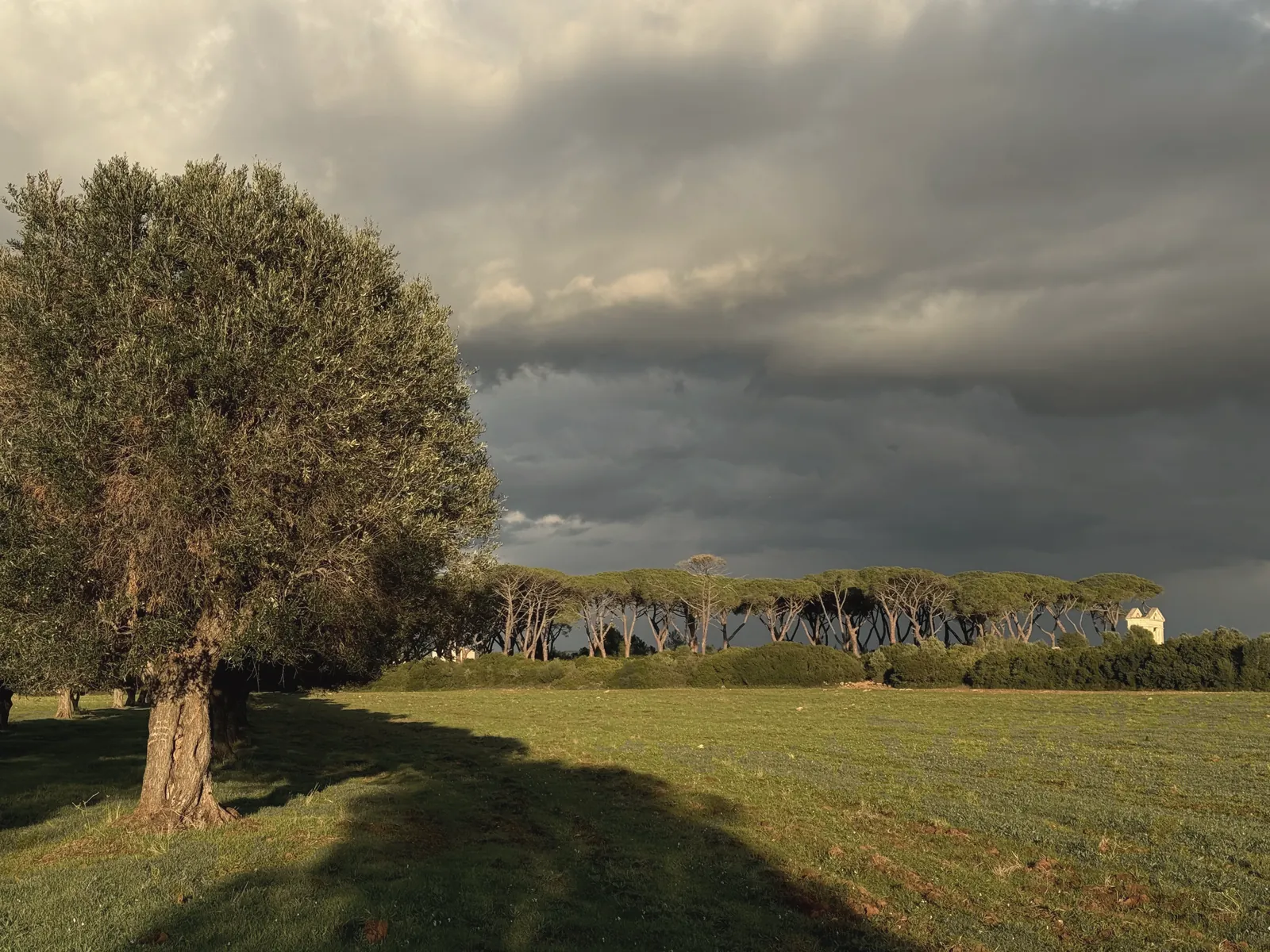
In winter it rains, every now and then. Not for weeks on end, as in the north: a storm comes in off the sea, pours for a day and moves on. A rainy day in Puglia is not spent on the beach: you take the car, and in half an hour you are in Taranto.
Taranto has a reputation as an industrial city, because of the steelworks outside town, to the north-west. The museum, the island and the Mar Piccolo tell another story, one that begins with the Spartans.
The MArTA, Taranto’s archaeological museum
The National Archaeological Museum of Taranto, the MArTA, was founded in 1887, in the years when the city was growing and every building site turned up tombs, vases, coins. It is still where it began, in an eighteenth-century convent of the Alcantarine friars, on Via Cavour, a stone’s throw from the swing bridge.
The rooms tell the story of Taranto and Puglia from prehistory to the early Middle Ages, but people come for a few things in particular.
The Gold of Taranto. Diadems, earrings, rings and necklaces that belonged to the women of the Greek city, worked so finely that, looking at them up close, you begin to doubt they are really more than two thousand years old.
The Tomb of the Athlete. A sarcophagus from the fifth century BC, with a young man inside and around him the Panathenaic amphorae, the prizes given to the winners of the games in Athens. A sportsman, in short, buried with his trophies.
The Venuses of Parabita. Two figurines of women, a few centimetres tall, carved in bone some twenty thousand years ago and found in a cave in Salento.
The Zeus of Ugento. A bronze from around 530 BC, three quarters of a metre tall: the god is about to hurl a thunderbolt, which has been lost. It was found by chance in 1961, while digging the foundations of a house in Ugento, in Salento.
Allow at least two hours, and the whole morning if you love archaeology. The museum is closed on Mondays; on the first Sunday of the month entry is free. Opening hours and booking rules change: check them on the museum’s website before you set off.
Taranto’s old town on the island: what to see
Leaving the museum you cross the swing bridge, and you are on the island. Old Taranto is all there, squeezed between the Mar Grande and the Mar Piccolo.
The swing bridge dates from 1887 and was rebuilt in 1958: when a Navy ship needs to pass, the two halves rotate and open. If you happen to see it open, stop and watch.
The Aragonese castle still belongs to the Italian Navy, and it is the sailors who show you round, on free guided tours of about an hour: the towers, the walkways, the sea below. It is best to ask about times beforehand.
In Piazza Castello two Doric columns remain from a Greek temple of the sixth century BC, among the oldest in Magna Graecia. It is known as the Temple of Poseidon, though archaeologists lean towards a goddess, perhaps Persephone.
Among the alleys stands the cathedral of San Cataldo, Romanesque, with an ancient crypt and a Baroque chapel that is all coloured marble, the saint’s cappellone. And beneath the houses, dug into the rock, lie the hypogea, underground chambers: one, privately owned, can be visited with a guide and goes down sixteen metres below the street.
If you still have time, in the new town go and see Gio Ponti’s co-cathedral, consecrated in 1970: a façade like a white sail pierced with openings, unlike any other church in southern Italy.
The Mar Piccolo and the mussels
The Mar Piccolo is an enclosed lagoon, and on its bed there are freshwater springs, the citri, which mix with the seawater. That is what makes the mussels of Taranto special, farmed here for centuries: the black Taranto mussel is a Slow Food Presidium. In Taranto they eat them raw with lemon, and every other way besides, and nobody understands why elsewhere people cook them for so long.
The Spartans and the dolphin
Taranto was Sparta’s only colony in Italy. Tradition dates it to 706 BC, and also says who the founders were: the Partheniae, the “sons of the maidens”, born in Sparta during a long war and looked down on at home, who set sail led by Phalanthus. Myth has it that Taras, son of Poseidon and the city’s legendary founder, was carried to safety by a dolphin. The city’s coat of arms still shows him that way, a boy riding a dolphin, as on the Greek coins.
Taranto never got on with its neighbours, the Messapians. In 338 BC a king came over from Sparta, Archidamus III, to lend a hand: he died beneath the walls of Manduria. The whole story is in the Stories of Maruggio and beyond.
Taranto in winter
In winter Taranto has two dates worth marking. On 22 November, St Cecilia’s Day, bands go through the streets before dawn playing pastoral tunes, and homes fry the first pettole, little puffs of dough: in Taranto, Christmas starts a month early. And if you stay until Easter, there is Holy Week, with the hooded brothers of the confraternity walking from church to church at an extremely slow pace, the nazzecata. We tell the story in the Stories.
Another day: Oria and Manduria
If it rains two days running, the second day is for heading inland.
Oria, twenty-five minutes away, stands on a hill and can be seen from far off. The cathedral, rebuilt after the earthquake of 1743, has a great dome of coloured tiles; to pay for the work, the story goes, two green marble columns were sold to the King of Naples, and they now stand in the Reggia di Caserta. Beneath the church, in a crypt, the mummified brothers of a Confraternity of Death are preserved: if you want to see it, ask at the cathedral first. The castle built by Frederick II is private and closed to the public: you look at it from outside, and that is enough, because from outside it is magnificent. Beyond the Porta degli Ebrei lay the giudecca, the Jewish quarter of one of the most important Jewish communities of the medieval Mediterranean.
Manduria, twenty minutes away, has the Messapian walls, three rings one inside the other, among the olive trees, with a necropolis of more than a thousand tombs and the cave of the Fonte Pliniano, the spring that, according to Pliny the Elder, never changed its level. It is worth checking the archaeological park’s opening hours before you go. In town there are the Chiesa Madre, the main church, with its sixteenth-century baptismal font, the giudecca, the old Jewish quarter, which begins right in front of it, and the Primitivo museum, in the old cisterns of the cooperative winery, where the visit ends with a glass. We talk about the wineries on the page about Primitivo di Manduria.
For everything else within an hour and a half – Grottaglie and its ceramics, Lecce, Gallipoli – there is the map of the area.
Taranto in a day
Morning at the MArTA, as soon as it opens. Mussels for lunch, on the Mar Piccolo or in the old town. In the afternoon the bridge, the castle with the sailors, the alleys of the island. On the way back, half an hour’s drive with rain on the windscreen, and at home the fire lit. In winter, at Corni di Fiasco, the evening always ends there. More on the page about long winter stays; and if you are coming to work, in Working from here.
Frequently asked questions
Is Taranto worth visiting?
Yes, for the MArTA, one of Italy’s great archaeological museums, and for the old town on its island. A day is enough.
How far is Taranto from Corni di Fiasco?
About thirty minutes by car. Manduria twenty, Oria twenty-five.
How long do you need for the MArTA in Taranto?
Allow at least two hours; half a day if you love archaeology.
When is the MArTA in Taranto closed?
On Mondays. Entry is free on the first Sunday of the month; opening hours and holiday closures are on the museum’s website.
Can you visit the Aragonese castle in Taranto?
Yes, on free guided tours run by the Italian Navy, lasting about an hour.
Can you visit the castle in Oria?
No: it is private and closed to the public. You see it from outside.
Do I need a car to get to Taranto?
Yes. From Corni di Fiasco to Taranto, Oria and Manduria you go by car.
The museum half an hour away, the fire in the evening.