
Corni di Fiasco · The area · Flamingos
Flamingos at the Salina dei Monaci
In Puglia, you watch flamingos from the roadside. From Campomarino di Maruggio you head east along the coast road to Torre Colimena, and behind the hamlet, past the reeds and the glasswort, lies the Salina dei Monaci: a stretch of shallow water, and in the middle of it, standing on one leg, the flamingos.
Visitors seeing them for the first time can hardly believe it. Pink flamingos, ten minutes from a trullo, in Puglia. In winter the saltpan reflects the sky like a pane of glass, and there they stand, heads down in the shallow water, as if nobody were watching.
Where to see flamingos in Puglia
The Salina dei Monaci lies behind Torre Colimena, on the Ionian coast, ten minutes by car from Corni di Fiasco. It is a basin of about twenty-five hectares, separated from the sea by a strip of sand and linked to it by a channel. Around it there are glasswort, reeds, and dunes with Mediterranean scrub. Across the road, the beach.
It is part of the Riserva naturale regionale orientata del Litorale Tarantino Orientale, the regional nature reserve established in 2002: more than a thousand hectares that bring together the Salina, the Palude del Conte marsh, the Cuturi and Rosa Marina woods and the mouth of the Chidro, the river that reaches the sea at San Pietro in Bevagna with its water at eighteen to twenty degrees all year round. The reserve is managed by the municipality of Manduria.
You watch the flamingos from the road that runs alongside the saltpan: just stop and be a little patient. In Italy you can also see them in the lagoons of the north and in the saltpans of Sicily and Sardinia; in Puglia, in our view, the Salina dei Monaci is one of the easiest places to see them, precisely because you can watch from the road.
When to see the flamingos
Flamingos once passed through here only on migration: they stopped for a few days and moved on. For some years now, part of the flock has not left, and stays through the warm months too. But they are wild animals: some days they are hundreds of metres away, some days they are not there at all.
They are seen mostly from October to April, in the cooler months: just when the beaches empty and the coast goes back to those who live on it, birds included.
The best time of day is sunset. In winter the sun goes down early and low, the water turns pink and orange, and the flamingos stand out dark against the light. It is one of the most beautiful things on this coast, and it costs nothing.
Why they are pink
Flamingos are born grey. They get their pink from what they eat: they filter the shallow water through their curved beaks, held upside down, and keep the tiny crustaceans and algae that live in salt water. Among them is Artemia salina, a tiny brine shrimp loaded with carotenoids, the same pigments that colour carrots. It takes about three years for a young bird to turn fully pink; and a flamingo that stops eating what it should fades.
So the saltpan, which for centuries gave salt, now gives the flamingos their colour.
The other residents
The flamingos are the most striking residents, but not the only ones. In the saltpan you see black-winged stilts, with their very long red legs, herons and little egrets, and sometimes even cranes. In spring, too, the reserve becomes a stopover for migrating birds on their way up from Africa: they arrive tired, stop to feed, and set off north again.
You do not need to be an ornithologist to go birdwatching here. A pair of binoculars, a little patience and a willingness to keep quiet for ten minutes are enough.
The monks’ saltpan
The name comes from the Benedictine monks who gathered salt here: the records mention them from at least the eighteenth century, when salt was white gold and whoever controlled it made a fortune. Tradition dates their presence much further back, to a gift from the Normans at the end of the eleventh century.
The monks also built the storehouses where the salt was left to dry, with a floor shaped like a donkey’s back so that the water would run off. All that remains from those days are the ruins of a tower and of the stores. From the saltpan, salt was carted inland, and one of the stops was the masseria now aptly called Masseria del Sale: a restaurant among dry-stone walls and olive trees, on the road to Manduria.
Then salt stopped paying, the saltpan was left to itself, and nature took everything back.
Torre Colimena and around
The saltpan has a sixteenth-century tower in front of it, Torre Colimena, one of those that passed signal fires along this coast to warn that pirates were coming. Around it is a hamlet of a few streets that seems stuck in the 1990s, with a little harbour and a fishmonger’s. The name, they say, comes from the Greek kalì limèna, the good harbour: it is folk etymology, and we like it.
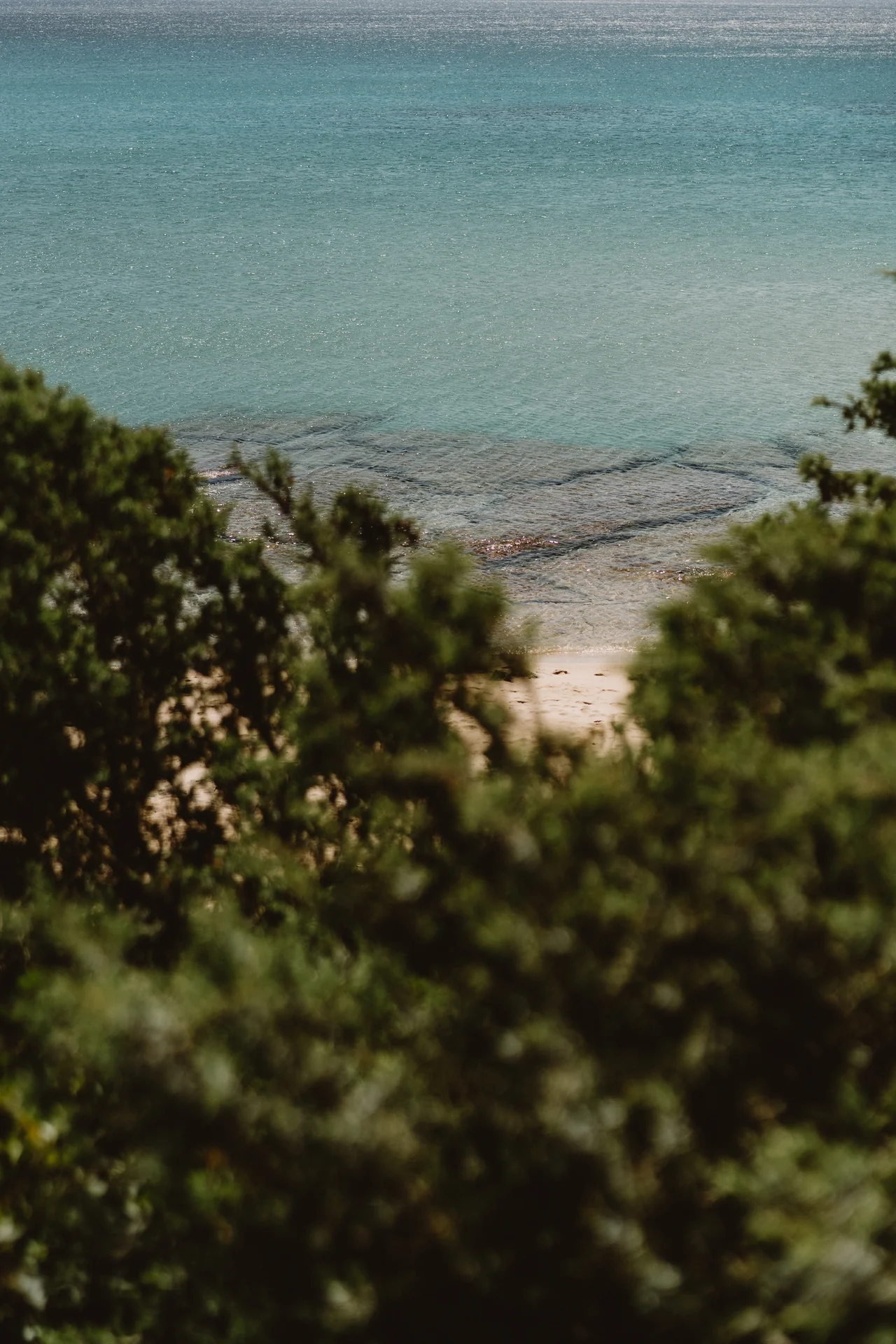
The towers, the pirates and the salt are in the Stories of Maruggio and beyond; the sea in front, on the beaches page.
How to behave
These are wild animals in a protected area, and a few common-sense rules apply to everyone. Stay on the road and the paths, and keep out of the water and the reeds. No noise and no creeping closer: a frightened flamingo flies off, and all the others with it. Dogs stay on a lead, always. And no drones: besides disturbing the birds, flying over a protected area is regulated.
How to get there from Corni di Fiasco
From Corni di Fiasco you head east along the coast road, ten minutes, to Torre Colimena; the saltpan is behind the hamlet, and you stop at the side of the road that runs alongside it.
Frequently asked questions
How far is the Salina dei Monaci from Corni di Fiasco?
Ten minutes by car, at Torre Colimena, heading east along the coast road.
When is the best time to see flamingos in Puglia?
From October to April, mostly. Part of the flock stays through the warm months too, but they are wild animals: nobody can guarantee you will find them.
What is the best time of day to see the flamingos at the Salina dei Monaci?
Sunset, especially in winter, when the light is low and the saltpan takes on colour.
Is there an entrance fee to see the flamingos at the Salina dei Monaci?
No: watching the flamingos from the road costs nothing.
Are there flamingos in Italy?
Yes: in the lagoons of the north, in the saltpans of Sicily and Sardinia and, in Puglia, at the Salina dei Monaci, where you watch them from the road, mostly from October to April.
Can I bring my dog to the Salina dei Monaci?
Yes, on a lead. See also the page Puglia with a dog.
Flamingos ten minutes away, the trullo among the olive trees.