Corni di Fiasco · Maruggio · Stories
Stories of Maruggio and beyond, on the Ionian Sea
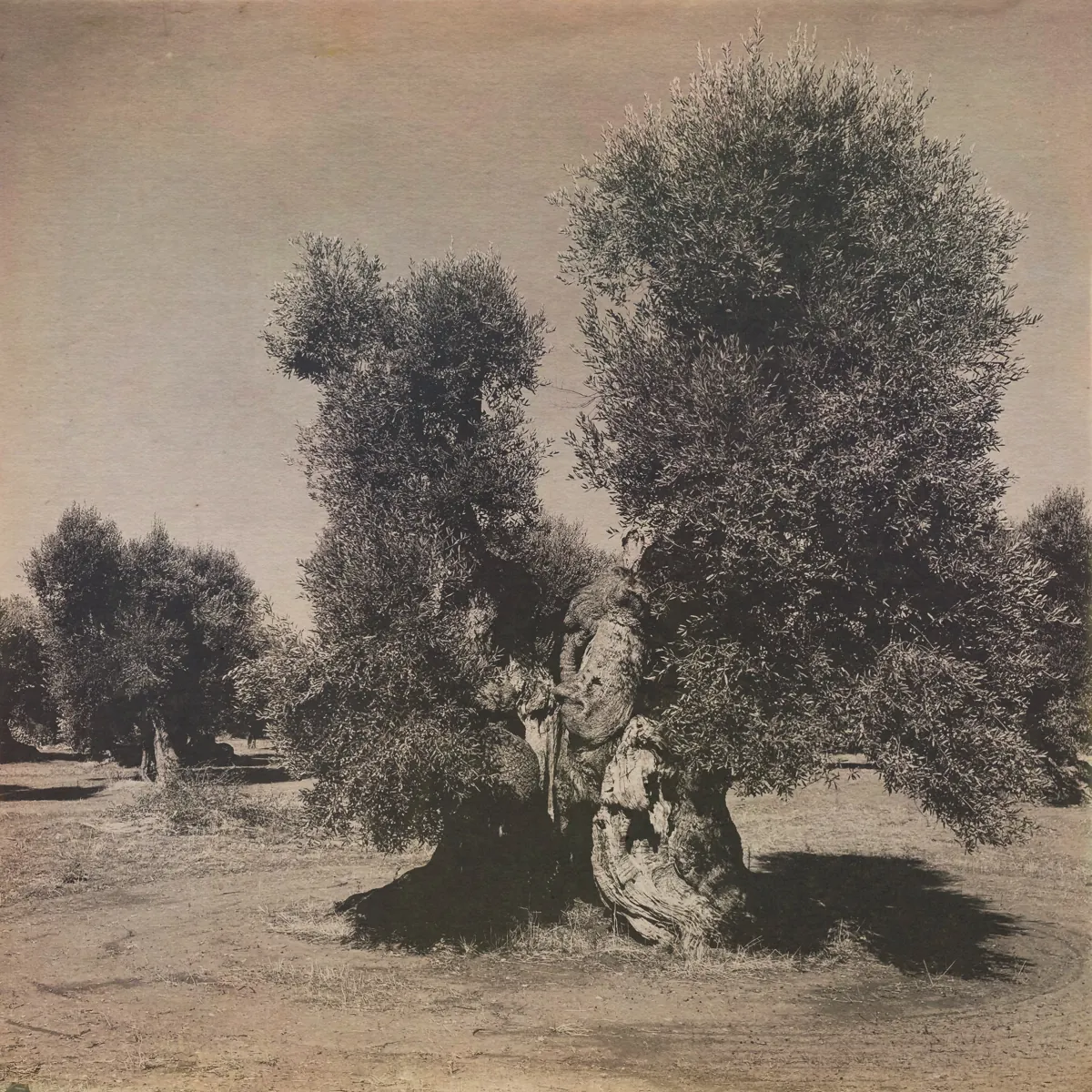
From Corni di Fiasco you can see olive trees, dry-stone walls and a trullo; one of those olive trees is at least five hundred years old. The rest you have to go looking for: twenty minutes away stand the walls beneath which a king of Sparta died; on the beach, a tower that waited for pirates; in the village, a castle where knights lived.
The Ionian Sea and Messapia
The sea off Campomarino is the Ionian, the same sea that washes Greece, Taormina and Syracuse, and in winter, at Torre Ovo, the sun sets right into it. Before the Greeks and the Romans this land was called Messapia, and its people were the Messapians, with their towns close by: Oria, by tradition the most important, and Manduria. The name Salento, the ancients said, comes from salum, the open sea; I like to think sal, salt, has something to do with it too, because here sea and salt always go together.
Messapians, Greeks and Romans
In Manduria the Messapian walls are still standing, and there are three of them, one inside the other, among the olive trees. In the cave at the entrance to the park there is a spring, and Pliny the Elder wrote that its level never changed, however much water you took out or poured in. It has been called the Fonte Pliniano ever since.
Taranto versus Lecce
Maruggio and Manduria are in the province of Taranto, but they look towards Lecce. People here speak Salentino, which has little in common with the dialect of Taranto: that is a border dialect, already leaning towards Bari, whereas in Maruggio one sentence is enough to hear Salento. Ask the people of Maruggio and they will tell you that the houses and the cooking are more Lecce than Taranto, too. Two thousand three hundred years after Archidamus there are no armies beneath the walls any more: the match is played at the table, in the dialect and in campanilismo, loyalty to your own bell tower, but it is still being played.
On the coast, in the other direction, lay Taranto, ancient Taras. It was founded by the Spartans and was Sparta’s only colony in Italy; it became one of the great cities of Magna Graecia, and its goldwork, the famous Ori di Taranto, can still be seen at the MArTA, the archaeological museum. It never got on with the Messapians. In 338 BC a king of Sparta, Archidamus III, came over from Greece to help Taranto teach the Messapians a lesson, and died right beneath the walls of Manduria: the Spartans were the ones who learned it. And to be honest, the rivalry has never quite ended.
The Romans were more patient: in 209 BC they took Manduria, and the Appian Way passed through Oria on its way to Brindisi. After Rome came the Byzantines, and with the monks who arrived from the East, the Greek language and the Greek rite returned. Until other sails appeared on the sea.
The Saracens and Frederick II
On the plate
On 2 November people in Puglia still make colva: boiled wheat, pomegranate seeds, walnuts and vincotto, cooked grape must. It is the dish of All Souls’ Day, and it takes its name from the Byzantine kollyba, the boiled wheat prepared in memory of the departed. The Arabs, for their part, left a word in the most Salentine dish of all: in ciceri e tria, pasta with chickpeas where part of the pasta is fried, tria comes from the Arabic itriyya, dried pasta. Two peoples who came here as masters and as raiders, and stayed on at the table.
On 4 July 925 the Arabs took Oria. They came as raiders, and yet they left something behind, even on the plate.
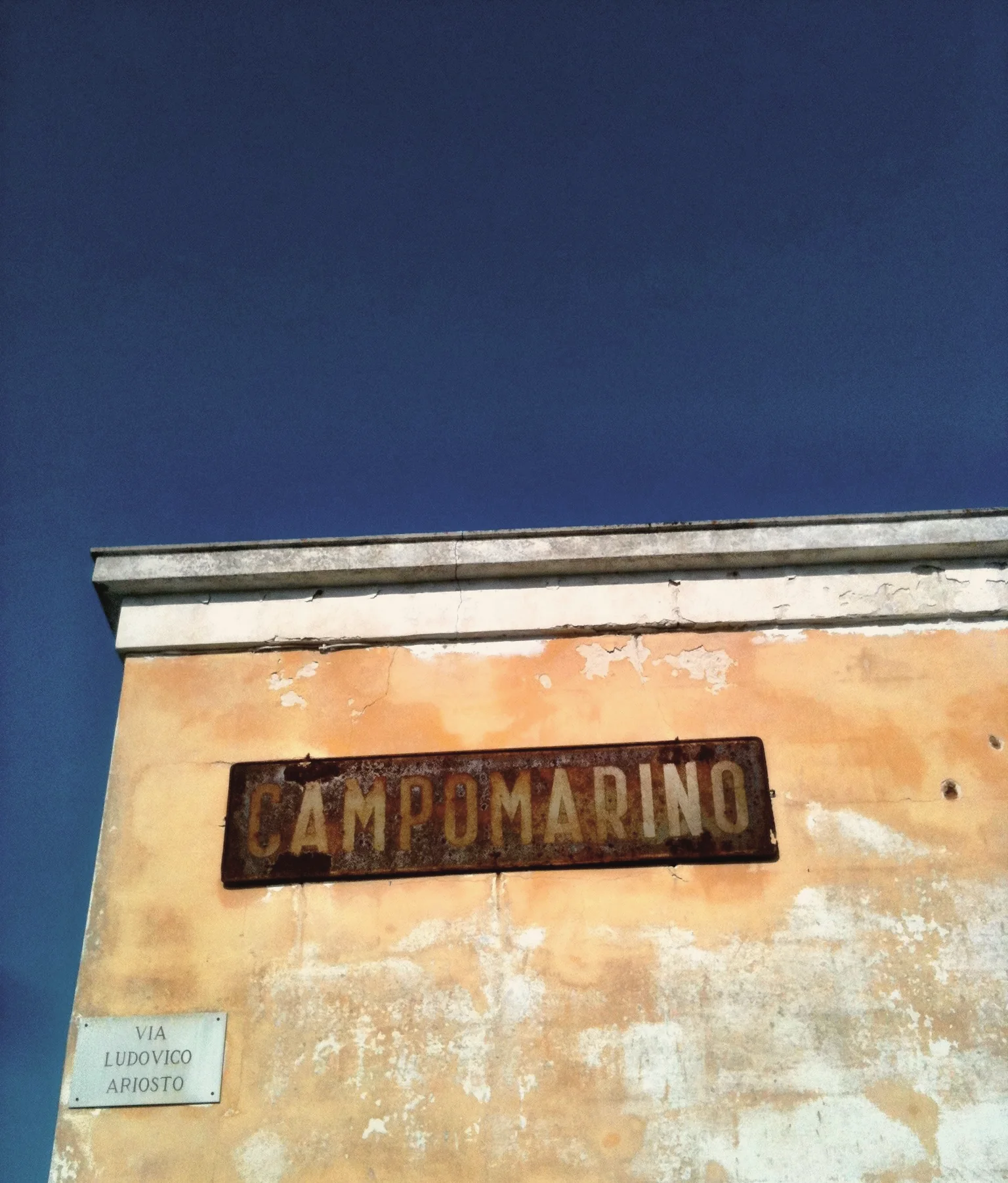
It was in those centuries that Maruggio was born. The old folk say that the inhabitants of the destroyed hamlets gathered in a hollow chosen precisely because it could not be seen from the sea; and it still works: from the sea off Campomarino, the old village cannot be seen.
Three centuries later, Frederick II of Hohenstaufen stopped on the hill of Oria on his way to his wedding in Brindisi: his castle is still there, and every summer the Torneo dei Rioni, the tournament of the town’s quarters, re-enacts the contest that, so they say, the emperor held to mark the occasion.
The Templars and the Knights of Malta in Maruggio
In a hall of Maruggio’s castle there is a keystone carved with a cross whose arms flare outwards: the cross of the Templars. When the order was suppressed, at the beginning of the fourteenth century, Maruggio passed to the Knights of St John, the future Knights of Malta, who stayed for five hundred years, until 1819.
Seven hundred years on, ask anyone in Maruggio who the knights were. They will answer: “The ones from Malta!”
The towers against the Saracens
From the beach at Campomarino you can see a tower among the houses: Torre Moline. Whoever kept watch there ran to warn the commander in Maruggio as soon as a suspicious ship appeared. Once, that was not enough: on 13 June 1637 pirates landed right there and Maruggio was sacked. It was St Anthony’s Day, and the village still thanks him for sparing it worse.
The towers of the coast
- Torre Ovo, towards Torricella: put out to tender in Taranto in 1566, it takes its name from the Monte dell’Ovo; today it is a ruin, with the sea at its feet.
- Torre Moline, in Campomarino: the pirates’ tower of 1637, now surrounded by houses; inside is the Museo dell’Archeoplastica, a museum of old plastic washed up by the sea.
- Torre Borraco, towards San Pietro in Bevagna: built in the same years, it signalled to Moline by sight; it has been restored.
- Torre Colimena: the beach in front, the saltpan behind, the hamlet around it.
The Salina dei Monaci
Behind Torre Colimena lies the Salina dei Monaci, the Monks’ Saltpan: twenty-five hectares of shallow water. Salt was already being extracted here in Roman times; the name comes from the Benedictine monks who worked it from at least the eighteenth century, when salt was white gold. Today it lies within a nature reserve, and the flamingos, which once only stopped on their migrations, now stay all year round, along with herons and little egrets. The hamlet around it seems stuck in the 1990s. At sunset, in winter, it is one of the most beautiful places on this coast.
The fear went back a long way: after the fall of Otranto in 1480, any sail might be the wrong one, and in the sixteenth century the Viceroy of Naples ordered towers to be built all along the coast, each within sight of the next, so that a fire lit on one would warn the others. Many still stand along this stretch of coast, and one of them, Torre Colimena, has a saltpan behind it.
Scirocco or tramontana?
In Maruggio, the first question in the morning is not whether it’s raining or sunny. It’s another one: “Scirocco or tramontana?” Everything depends on it. Your mood, the sea, how much gets done and how much gets put off until tomorrow.
The tramontana comes down from the north. The sea turns flat as a millpond, the water goes clear, and the beaches look just like the photos you’ve seen. It’s hot, but a heat you can bear. And in the evening a little breeze picks up that sends you back indoors for a jumper.
The scirocco blows in from the south-east and brings Africa with it. It swells the waves, coats everything in salt, and makes the air heavy and damp by eight in the morning. Sometimes, between autumn and spring, huge sand-laden clouds roll in from the sea: when it rains, the cars are left covered in a red dust that really does come from the Sahara. Here they just call it scirocco. When it blows hard it becomes sciruccòni, the big scirocco. When it has truly lost its mind, scirocco ’ncujunùtu, and we’ll leave the translation to you.
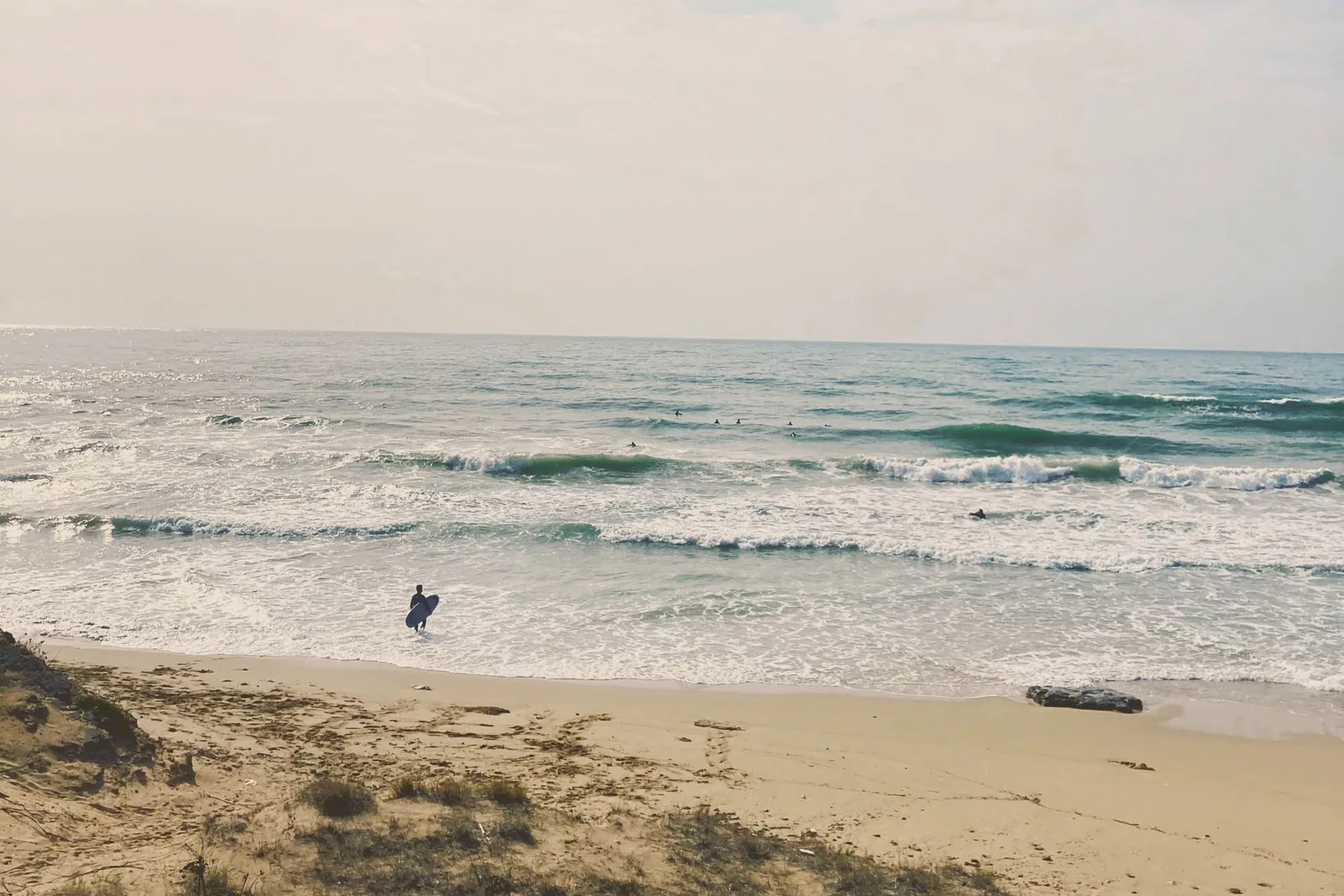
For many it’s a curse, and always has been. The fisherman would get up, look at the sky and say: “Let’s hope it’s not scirocco,” because in heavy seas nobody went out. The farmer said it because of the sticky heat that makes working in the sun almost impossible. We still say it today, but with the beach in mind: with the tramontana the sea is a millpond and nobody breaks a sweat.
Not that the tramontana is always gentle. In winter it comes from the Balkans, cold enough to flay a goat. That’s why here they call it scorcia crapi, the goat-flayer.
So every morning you step outside, sniff the air, see which way the trees are bending, and decide the day. Before you choose a beach, do the same.
The sacred
At San Pietro in Bevagna there is a small church built on top of a medieval tower. Tradition says that the apostle Peter was shipwrecked here around AD 44, and that here he said his first Mass in Italy. Historians don’t believe it. The faithful do.
In Maruggio the patron saint is St John the Baptist, the same as the knights’, but the most heartfelt feast is on 21 November, for the Madonna del Verde, with the ssittàta alla Matònna, the vigil on the evening before. They say she cured the children of favism, the “green sickness”; some speak of a plague, others of yet another raid.
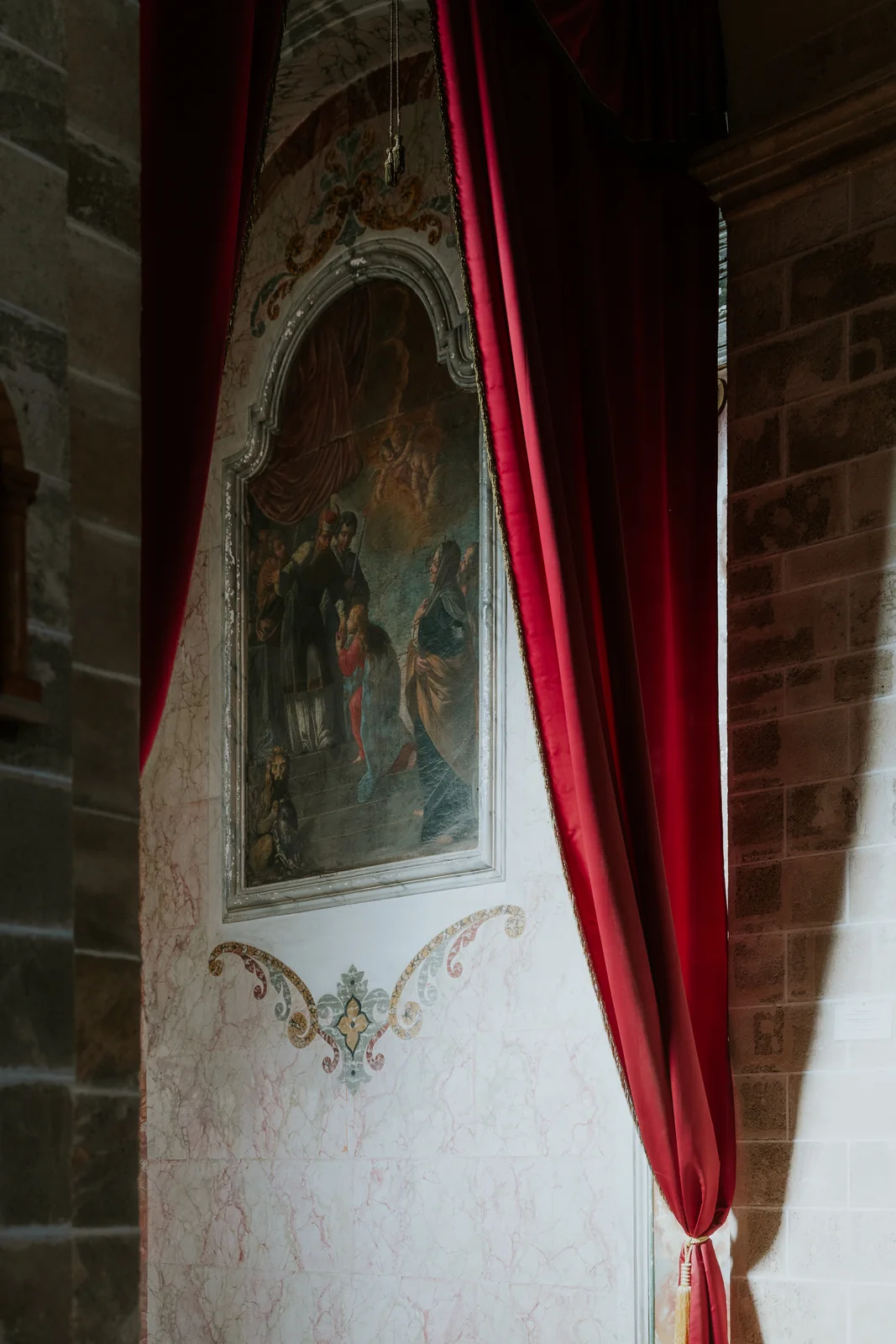
Holy Week in Taranto
On Maundy Thursday the perdùne come out of the church of the Carmine: hooded, barefoot brothers of the confraternity who walk in pairs from one altar of repose to the next at an extremely slow pace, the nazzecata, a swaying that seems to lead nowhere. At midnight Our Lady of Sorrows, the Addolorata, comes out; on Good Friday the Misteri, the statues of the Passion, set off, and they only return on Saturday morning. And Christmas in Taranto starts a month early: on 22 November, St Cecilia’s Day, bands play pastoral Christmas tunes in the streets before dawn, and every home fries the first pettole, little puffs of dough.
In Taranto the sacred moves at a different pace, very slowly, and even Christmas starts earlier.
Villa Montoto and the Maviglia
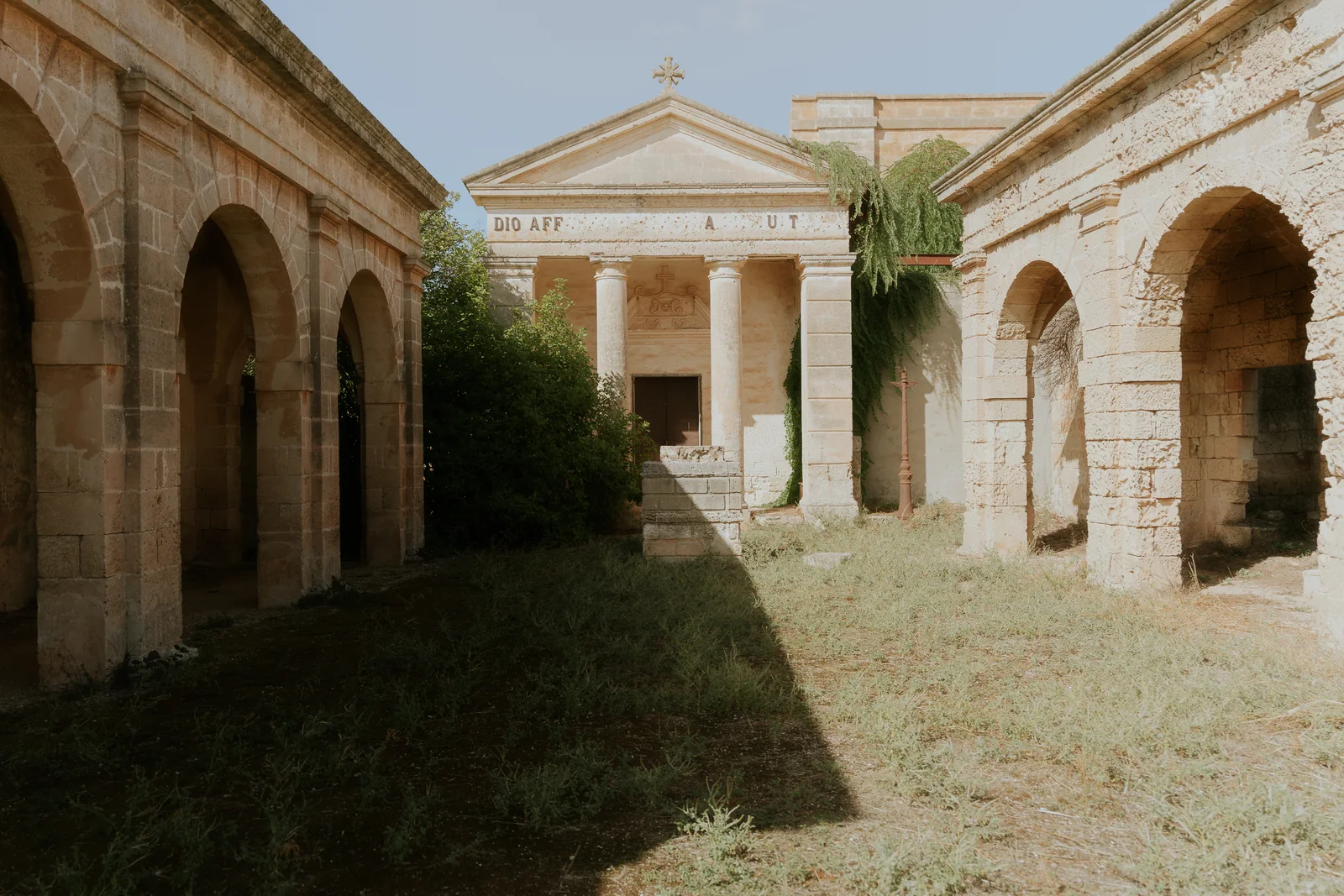
In the nineteenth century the Gigli, a noble family from Manduria, owned Villa Montoto in Maruggio, with the only Masonic garden in Salento. In the village they say that one of the Gigli, perhaps the son, named the nearby masseria Maviglia after his cat, Viglia: “ma Viglia”, French for “my Viglia”; and that in the middle of the villa’s portico he buried his dog, Toto: “Mon Toto”. It is also said that at the Maviglia the Gigli hosted Freemasons from all over Italy and initiated them with pagan rites. Hearsay, of course, but vox populi.
Outside the churches, stories of another kind go around, at Villa Montoto and at the Maviglia.
Fòri: summers in the country
Fichi cucchiati
The figs were split in half and laid out in the sun on cannizzi, the reed mats that give shade today, at Corni di Fiasco too, and back then were used to dry figs and tomatoes. Once dry, they were closed up again in pairs, cucchiati, with an almond inside: that is why the women spent their days cracking almonds, a cazzare mènduli. They were everyone’s breakfast and afternoon snack, they gave you strength for a day in the fields, and they travelled as far as America. All over Italy people still say fare le nozze coi fichi secchi, “to hold a wedding with dried figs”, for a celebration put together with very little. Here, for many families, those figs really were all there was.
My father was born in 1939. When he was a boy, in summer, everyone went fòri, out to the country to visit Nonna. The women cazzavano mènduli, cracking almonds for the figs; the men worked the fields; the children played together and ran free all the way to the dunes, which, before the coast road was built, towered high and came straight down to the sea.
Fòri means outside: outside the walls, outside the village. When the harvest season came, people moved out to the country and stayed until the grape harvest. Life was lived outdoors, with an afternoon nap in the shade of the siòzi, mulberry trees with enormous crowns, and at night people slept crammed into the trulli and the little farmhouses, with no drains and water drawn from the well, sometimes two families to a trullo. In winter each family kept to itself, and people saw each other at Mass on Sundays; in summer everything was shared: work, food, company.
There were the fichi cucchiati, the gold of Maruggio, everyone’s breakfast and afternoon snack.
Dùnico and Primitivo
Dùnico, as the old people remember it, was a strong, spicy red. Today the wine from round here is called Primitivo di Manduria, because it left from Manduria station in tank wagons, bound for France and northern Italy, to give body to other wines. But the grape belongs to this whole land, Maruggio included, and it is the same as California’s Zinfandel and Croatia’s Tribidrag: DNA has settled it. It came from the far side of the Adriatic; in Gioia del Colle it was named Primitivo, “the early one”, because it ripened before the others; and to Manduria, tradition says, it was brought in 1881 by a countess from Altamura, as part of her dowry. A cousin planted it right on the dunes of Campomarino. And why Milan liked it better watered down is Uncle Pici’s story, on our Primitivo page.
There was mieru, wine, from the Latin merum, undiluted wine; and there was dùnico, from the vines planted in the sand of the dunes.
Lampante oil
The good oil was eaten. What was left, acidic and dark, was lampante oil, lamp oil, and from the seventeenth century Salento turned it into a trade. It was pressed in mills dug out of the rock, where, underground, the oil did not congeal in the cold, and from Gallipoli it left for the street lamps of Paris, London, Amsterdam and Stockholm. Before gas, the streets of Europe were lit by this land too.
The olive oil that wasn’t eaten travelled furthest of all: it reached the street lamps of Paris and London.
All around, the landscape you can still see today: dry-stone walls raised by the paritàri, the wall builders, with the stones turned up by the plough; boundaries marked by a finèta, a row of three or four trees; and the Saracen trulli, low and wide. Heaven help you if you call them trulli in front of anyone from the Valle d’Itria, home of the famous cone-roofed ones of Alberobello.
In the evening everyone gathered round the fire: an organetto, the little button accordion, a violin, a guitar, panzerotti, little fried pastry turnovers, and wine, the old songs, then off to bed, to wake at dawn. Those fires were not only there to give light.
While restoring Corni di Fiasco, I tried to recapture the simplicity those people must have had back then.
The pagan
Here the Christian calendar did not wipe out the one that came before: it simply sat down on top of it.
On the Madonnina dune at Campomarino, where the chapel of the Madonna dell’Altomare stands today, there was once a Greek temple of Artemis. On 15 August two processions, one by boat from the harbour and one on foot along the coast, meet right there, on the dune. At the same time of year the Romans celebrated Diana, the Latin Artemis, with the Nemoralia, torchlit night processions. Nobody has ever proved that the Feast of the Assumption on 15 August grew out of it; but the date is the same, and the procession ends where the goddess’s temple stood.
St John’s feast went much the same way. It fell on 24 June, close to the summer solstice, and that night bonfires were lit, as they still are in Latvia for Jāņi; then, in 1928, a bishop moved it to July. On Christmas Eve, close to the winter solstice, even bigger ones were lit, which in Maruggio became li fuechi di cristo piccinnu, the fires of the Baby Jesus: it is said they were lit to keep the ancient rite alive, and to keep the newborn Son of God warm. I think Maruggio has always had a soft spot for the pagan: its oldest feasts fall on the solstices, and the Knights of St John chose this very village. Must be a coincidence.
And then there is the pizzica, Salento’s folk dance. Today it is danced in the piazza in summer and looks like a picture-postcard courtship game. But it was born as a ritual, and not a sunny one: it served to free the women pizzicate, “bitten”, by the tarantula, hence the name: the ones Ernesto de Martino came looking for in Salento in 1959 and described in The Land of Remorse. I have never seen a tarantata, as those women were called, but the old people’s stories are full of them. And beneath that rite many see an even older one: the Bacchanalia, the rites of Dionysus brought here by the Greeks, with wine, dance and trance. There is no proof, but it is hard to watch the pizzica and not think of them.
Corni di Fiasco, a minute from the sea at Campomarino.
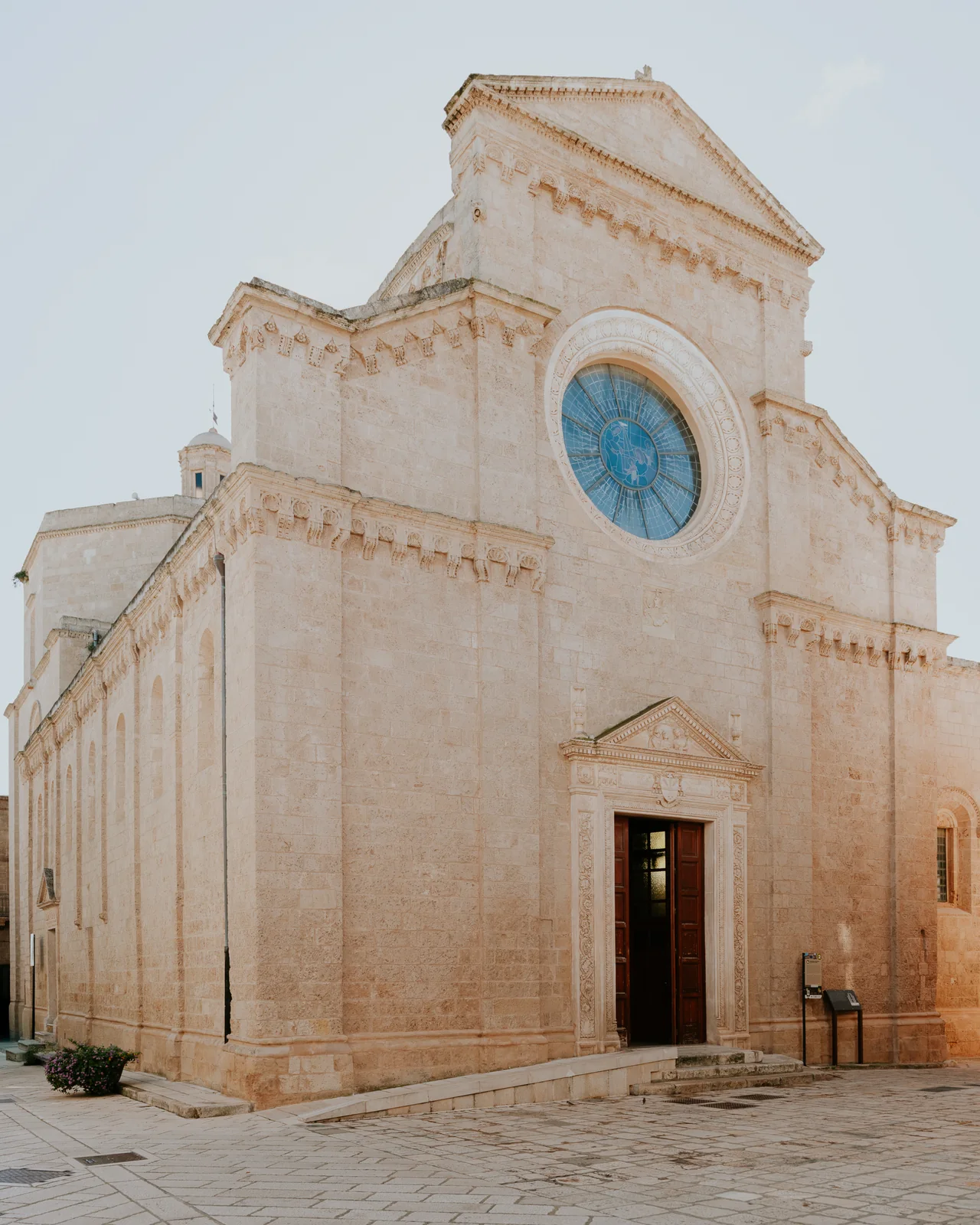
The photos of the mother church and of Villa Montoto are by Alba de Angelis; the other images and the videos are by Valerio.